Commercial restoration planning for occupied properties
Commercial restoration planning for offices, retail spaces, and multifamily properties
Commercial restoration planning helps property owners and managers respond to water, fire, smoke, or mold damage without improvising important decisions during an emergency. A useful plan identifies who can authorize work, how occupants will receive information, which areas must be protected first, and what needs to happen before normal operations resume.
The same plan will not work for every commercial property. An office must protect employees, records, and technology. A retail space must consider customers, inventory, and entrances. A multifamily property requires resident communication and coordination across individual units and shared systems.
Managing damage at an occupied property? Explore ServicePros commercial restoration services for cleanup, drying, remediation, and recovery planning.
What should a commercial restoration plan cover?
A restoration plan should establish a clear chain of responsibility. Building ownership, property management, maintenance personnel, security teams, tenant representatives, insurance contacts, and restoration providers may all need to participate.
One person should have authority to request emergency service, while another may be responsible for communicating with occupants or documenting conditions. Those responsibilities should be decided before a loss occurs.
The plan should also identify priority spaces. Electrical rooms, server areas, occupied units, customer entrances, inventory storage, and mechanical systems may need different levels of protection. Contact details, insurance information, floor plans, utility locations, and vendor records should remain accessible even when the building cannot be entered.
What happens first after property damage?
The first priorities are safety, source control, stabilization, and documentation. The exact response depends on the event.
A broken pipe may require the water supply to be shut off before extraction begins. Fire damage may require clearance from emergency officials before anyone enters. Sewage, mold, or other contamination may require access restrictions.
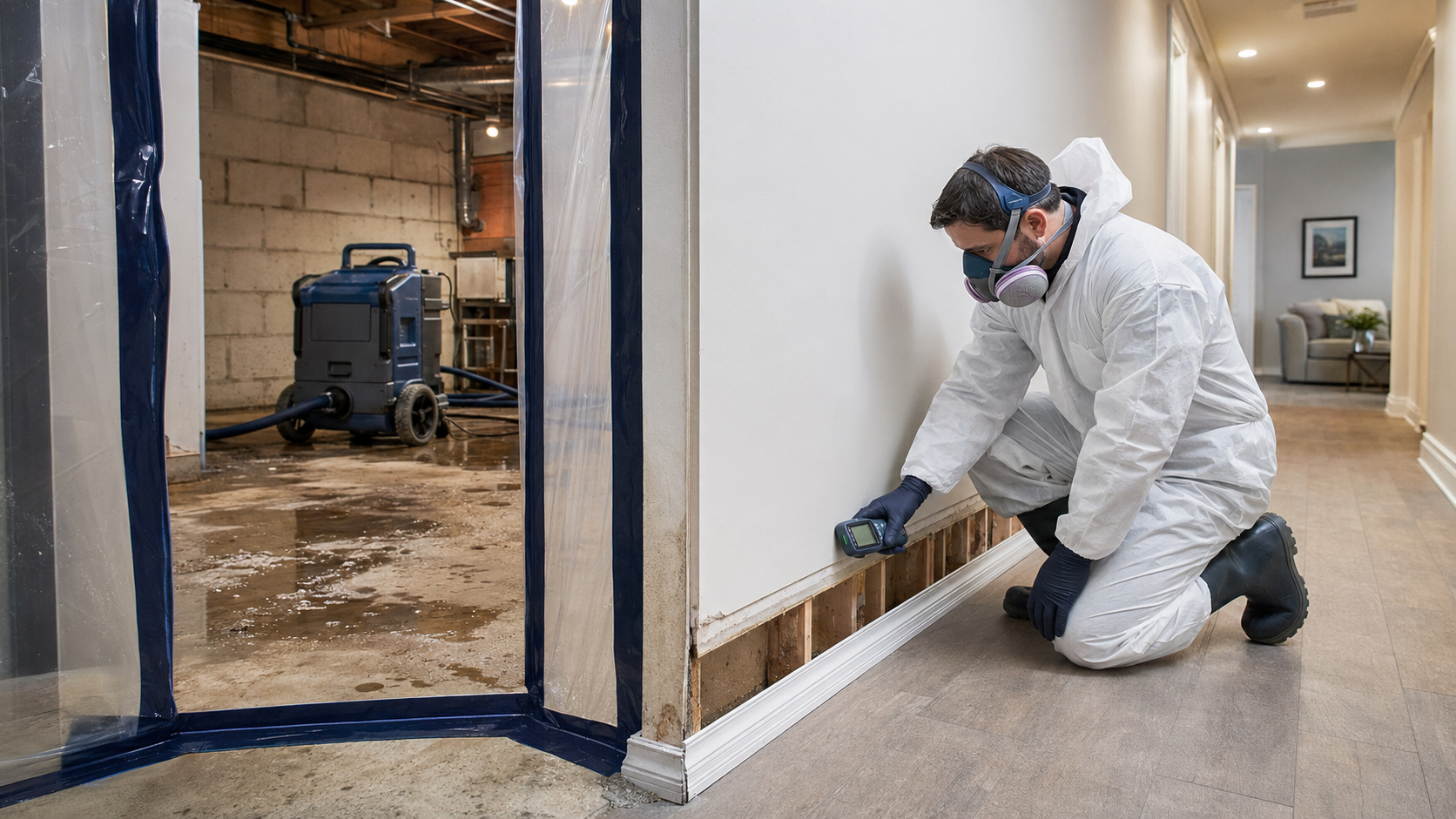
Once conditions allow, the property team should document visible damage and identify which areas may have been affected beyond the obvious source. Water, smoke, and odors can move between rooms, floors, units, and shared building systems.
When water reaches ceilings, walls, flooring, or other materials, ServicePros
water damage restoration services can support extraction, drying, moisture control, and repair planning.
How should offices plan for restoration?
Office restoration planning should protect employees while supporting business continuity. Even a localized leak can affect carpet tiles, suspended ceilings, electrical components, records, workstations, and data systems.
The plan should identify which operations could move to another part of the building and which employees could work remotely. It should also establish who can provide access to server rooms, mechanical spaces, secured records, and tenant suites.
Can part of an office remain open?
Sometimes. It depends on the location of the damage, electrical safety, indoor conditions, contamination, equipment placement, noise, and access requirements.
An unaffected section may remain usable when it can be separated safely from the restoration area. However, the desire to resume work should not determine whether a space is ready for occupancy. That decision should reflect the actual conditions inside the building.
If damage affects an occupied workplace, establish controlled access before cleanup begins. ServicePros helps commercial properties across Maryland, Washington D.C., and Virginia coordinate restoration while protecting unaffected areas when conditions permit.
What does a retail restoration plan need to protect?
Retail properties must consider customers, employees, merchandise, sales systems, entrances, and storage areas. A small loss near a checkout station or main entrance can interrupt operations even when most of the property remains unaffected.
The plan should explain how customer access will be redirected and how damaged inventory will be separated from unaffected products. Products exposed to clean water may require a different response from merchandise affected by sewage, soot, smoke, or mold.
Damaged inventory should be photographed and recorded before disposal when conditions allow. This creates a clearer record for ownership and insurance representatives and reduces confusion about what was affected.
Can a retail business stay open during restoration?
Possibly, if the affected area can be isolated without creating safety or contamination concerns. Clear barriers and controlled access may allow limited operations in another portion of the property.
Remaining open is less practical when damage affects the primary entrance, checkout systems, electrical service, essential inventory, or indoor conditions throughout the space. The restoration plan should include alternatives instead of assuming the business can always operate around the work.
Why do multifamily properties require a different plan?
Multifamily restoration combines property recovery with resident coordination. Damage beginning in one apartment may move into units above, below, or beside it through plumbing lines, walls, floors, ceilings, and shared systems.
Property management needs a reliable way to contact residents, arrange access, document each affected unit, and explain when restoration teams will be present. The plan should also account for residents with accessibility needs, children, pets, and people who may require temporary relocation.
Why should every affected unit be documented separately?
The source may be shared, but the damage will not be identical in every unit. One apartment may have visible ceiling damage while another has moisture inside a wall. A third unit may experience only staining or odor.
Separate records clarify which materials were affected, when access occurred, what work was completed, and which repairs remain. This helps residents, management, contractors, and insurance representatives follow the project without combining several different conditions into one general report.
Why moisture mapping matters in commercial buildings
Visible water rarely shows the full extent of a loss. Moisture may move beneath flooring, above ceilings, behind walls, or between adjoining units.
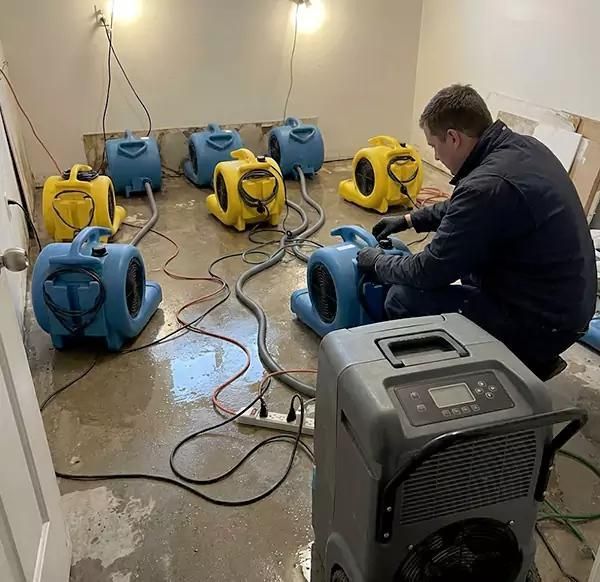
Moisture mapping helps divide the property into areas requiring different responses. One space may need extraction, another may need controlled drying, and an adjoining area may need monitoring even if no damage is visible.
Commercial drying also has to account for occupancy, equipment noise, electrical capacity, access schedules, and the different ways building materials hold moisture. Learn more in How structural drying helps prevent secondary damage
How should mold be managed in an occupied property?
Mold planning begins with moisture control. Cleaning visible growth without addressing the water source can allow the condition to return.
In an occupied office, store, or apartment building, access and containment become especially important. The objective is to avoid unnecessary movement through the affected area while damaged materials are evaluated, cleaned, dried, or removed.
When mold affects a commercial or multifamily property, ServicePros mold remediation services can support containment, removal, cleaning, moisture control, and repair planning.
What documentation supports the restoration process?
A clear record should show when the event was discovered, where the damage was observed, which occupants or units were affected, and what emergency measures were taken.
Photographs, videos, moisture records, work authorizations, communication logs, reports, and repair recommendations can help stakeholders follow the project. Property managers should also keep copies of floor plans, leases, insurance contacts, utility information, and vendor agreements outside the affected building.
Documentation does not replace urgent mitigation. It supports the recovery process while work moves forward.
When should a commercial property contact a restoration company?
Restoration support should be requested when damage affects occupied areas, building materials, inventory, shared systems, or multiple units. It is especially important when water moves between floors, smoke reaches areas beyond the source, contamination is involved, or the extent of the damage is unclear.
Early coordination gives the property team a clearer way to control access, document conditions, protect usable areas, and plan the transition from emergency mitigation to repairs.
Commercial damage requires coordinated decisions, not disconnected repairs.
Request commercial restoration service from ServicePros for offices, retail spaces, and multifamily properties across the Mid-Atlantic Region.