Can AC condensation cause mold in Maryland homes?
Can Air-conditioning condensation lead to mold during a humid Maryland summer?
Yes. Air-conditioning condensation can contribute to mold when water escapes from the condensate drainage system or repeatedly forms on cold HVAC components. A clogged drain line, overflowing pan, disconnected pipe, or poorly insulated cold surface can keep nearby building materials damp without creating an obvious puddle.
During August, longer cooling cycles can allow a slow condensate leak to wet the same ceiling, wall, insulation, or flooring repeatedly before a homeowner notices a stain or musty odor. The air conditioner does not create mold by itself. The concern is moisture that remains trapped long enough to affect surrounding materials.
Noticing moisture or musty odors near your air-conditioning system? Learn how ServicePros handles mold remediation when hidden condensation affects building materials..
Why air conditioners produce condensation
An air conditioner removes heat and moisture from indoor air. As warm air passes over the cold evaporator coil, some of the water vapor becomes liquid condensation.
Under normal operating conditions, this water:
- Collects in a drain pan.
- Moves into a condensate drain line.
- Flows to an approved drainage location.
Condensation is therefore a normal part of cooling a home. Water damage is not.
A problem develops when the system cannot collect or drain the water correctly. Because condensate is produced whenever the air conditioner operates, even a small drainage failure may introduce moisture repeatedly.
Which AC Problems Can Allow Condensation to Escape?
Several HVAC-related conditions can release condensation into the property.
A clogged condensate drain line
Dust, biological buildup, debris, or another obstruction may restrict the condensate line. When water cannot drain, it can back up into the pan and eventually overflow.
The resulting moisture may enter drywall, insulation, ceilings, floors, baseboards, or nearby wall cavities.
A cracked or rusted drain pan
Drain pans can deteriorate with age. A crack, opening, or corroded area may allow water to escape before it reaches the drain line.
The leak may remain unnoticed when the air handler is located in an attic, utility closet, basement, or another area that is not checked frequently.
A disconnected or damaged drain line
A loose fitting or damaged section of piping can release water beside the HVAC equipment. The system may continue cooling normally, giving homeowners little reason to suspect that condensation is entering surrounding materials.
Condensation on cold lines or ductwork
Moisture can form on cold refrigerant lines or ducts when humid air reaches their surfaces. Missing, damaged, or poorly fitted insulation can make this condition more likely.
This type of condensation may drip slowly onto insulation, ceiling materials, framing, or stored belongings. The moisture source can be easy to miss because there may be no failure inside the drain pan.
Can a Clogged AC Drain Cause Mold?
Air-conditioning systems often run for extended periods during humid Maryland weather. A partially blocked line or small pan leak may therefore release water repeatedly instead of causing a single event.
Humidity can also slow natural drying. Porous materials may absorb condensation faster than they release it, particularly in enclosed or poorly ventilated areas.
Materials that can retain moisture include:
- Drywall and ceiling board
- Fiberglass or cellulose insulation
- Wood framing
- Subflooring
A surface can appear dry while moisture remains inside insulation, beneath flooring, or behind paint. This is why repairing the air conditioner does not always complete the drying process.
Why August can make an unnoticed AC leak more serious
Moisture can remain beneath flooring, behind baseboards, inside wall cavities, or in the room below the original backup. Once contaminated materials have been managed and the affected area has been cleaned, structural drying helps reduce moisture left inside the building.
How long does sewage cleanup take? There is no fixed timeline. The process depends on how far the water traveled, which materials were affected, what must be removed, and how long drying takes. ServicePros coordinates sewage-related cleanup with its broader
water damage restoration services, including extraction, moisture assessment, structural drying, and repair planning.
What are the warning signs of an AC condensate leak?
A condensate problem does not always create a large puddle. Early signs may appear around the indoor unit, vents, ceilings, or adjoining rooms.
Homeowners can observe accessible areas without opening HVAC equipment or disturbing suspected mold. Do not touch wet electrical components, remove contaminated materials, or stand beneath a sagging ceiling.
Does a musty smell when the AC runs always mean mold?
No. A musty odor may come from damp dust, a wet filter, drainage problems, microbial growth, or water-damaged materials near the HVAC system.
The timing provides a useful clue. If the smell becomes stronger whenever the cooling system operates, moisture may be present around the equipment, drain components, ductwork, or materials affected by an earlier leak.
Cleaning an accessible vent or using fragrance may temporarily change the odor, but it will not correct a clogged drain or dry concealed materials.
If stains or odors return whenever the air conditioner runs, the moisture may extend beyond routine HVAC maintenance. ServicePros provides mold and water damage restoration in Gaithersburg, MD and surrounding restoration markets.
What should happen after the HVAC leak is stopped?
Correcting the HVAC problem stops additional condensation from escaping. The next priority is determining what became wet and whether those materials are drying properly.
The response may include:
- Identifying the affected area
- Removing water that remains
- Drying ceilings, walls, floors, or framing
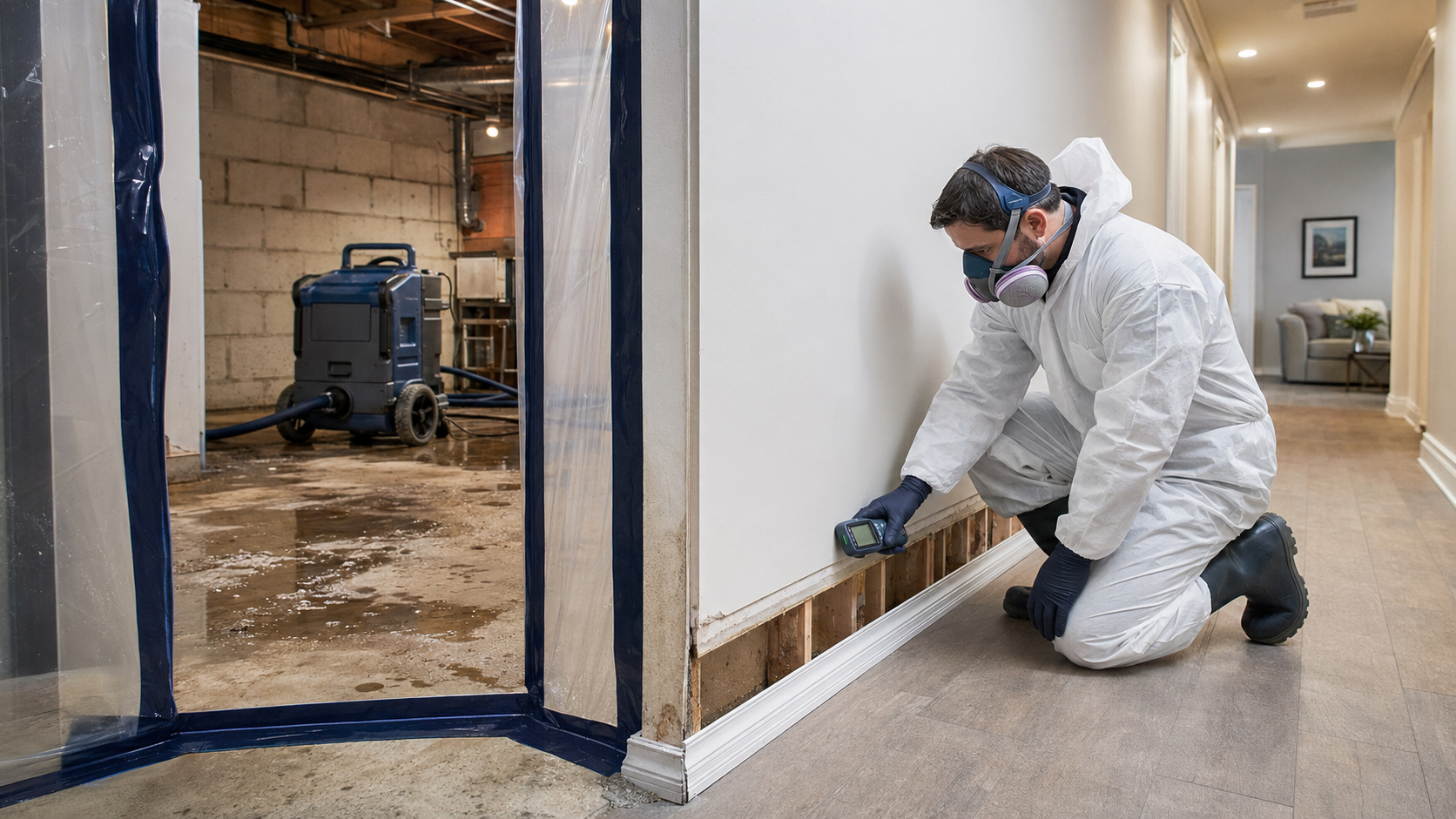
- Containing affected areas when mold is present
- Confirming drying before repairs begin
Cosmetic work should wait until the moisture problem has been controlled. Painting a stain or replacing drywall while adjacent materials remain damp can conceal the warning signs and allow odors or damage to return.
Is mold remediation always required after an AC leak?
No. Not every condensate leak requires mold remediation.
A recently discovered leak may need only HVAC correction and drying when there is no visible growth, persistent odor, or contaminated material. Mold remediation becomes more relevant when:
The response should be based on the condition of the materials, not solely on the fact that an AC leak occurred.
When should you call a remediation company?
Consider restoration or remediation assistance when condensation has reached building materials or the extent of the moisture is unclear.
If the issue appears limited to the air conditioner or condensate drain, begin with a qualified HVAC contractor. If the HVAC problem has caused moisture damage to the property, a restoration company can address the affected materials after the source is stopped.
Concerned that AC condensation has caused hidden moisture or mold? Request service from ServicePros Cleaning & Restoration for help in Gaithersburg and other served Maryland communities.
Stop the condensate leak before repairing the damage
Condensation is a normal result of cooling humid air. Overflowing pans, obstructed drains, damaged piping, and condensation on exposed cold surfaces are not.
During a humid Maryland summer, these problems can repeatedly wet the same materials while remaining out of sight. Correcting the HVAC source, drying affected materials, and addressing mold only when conditions require it provides a clearer path to restoration than covering stains or treating odors alone.