What should a mold remediation estimate include in Fairfax?
Finding mold in a basement, bathroom, attic or finished living area raises an immediate question: what will it take to correct the problem properly?
The answer should involve more than applying a cleaning product to the visible growth. Mold is connected to moisture, affected building materials and the conditions surrounding the damaged area. A responsible remediation proposal must explain how those factors will be evaluated and addressed.
At Service Pros Cleaning & Restoration, we develop the scope after considering where the growth appears, how moisture reached the area, which materials are affected and how the work can be completed without unnecessarily spreading particles into other parts of the property.
For homeowners and property managers comparing mold remediation in Fairfax, VA, understanding these components makes it easier to distinguish a complete restoration plan from a surface-cleaning quote.
The estimate should be based on the property, not only a photograph
Photographs can help us understand what you are seeing and prepare for the initial conversation. However, they cannot confirm the complete extent of affected materials or explain what is happening behind a finished surface.
A dark area on drywall may be associated with a plumbing leak, exterior water intrusion, condensation or an earlier water incident that did not dry completely. A musty odor may also extend beyond the area where visible growth is present.
The on-site evaluation should consider the visible condition, surrounding materials, moisture indicators and recent property history. We may ask whether the area has flooded, whether plumbing or roofing repairs were completed and whether the staining or odor has returned after previous cleaning.
The resulting estimate should connect these observations to the recommended work. A contractor should not calculate the entire project using only the approximate square footage of visible growth.
Request a mold remediation assessment from Service Pros so we can evaluate the affected area, moisture conditions and materials before preparing a property-specific scope.
Moisture evaluation belongs at the beginning of the scope
Mold remediation and moisture control are directly connected. Removing affected material without addressing the conditions that allowed it to remain damp can leave the property vulnerable to another problem.
The proposal should identify the known or suspected moisture source. If the source has already been repaired, the remediation team may still need to determine whether the surrounding materials have dried sufficiently.
When the source has not been confirmed, the estimate should state what can be evaluated by the restoration company and whether a plumber, roofer, HVAC contractor or another qualified provider may be needed.
At Service Pros, we look at visible staining, material condition, moisture readings and the way water may have traveled through the property. This helps us determine whether the mold-related work needs to be coordinated with water damage restoration.
A dry surface does not always mean a dry assembly
Drywall or flooring may feel dry at the surface while insulation, subflooring, framing or another concealed material continues to hold moisture.
This is one reason mold cleanup cannot be planned by appearance alone. The assessment should consider the materials behind and adjacent to the visible condition before new finishes are installed.
If complete access is not possible during the initial evaluation, the proposal should explain which assumptions are being made and how concealed findings will be handled after authorized work begins.
The affected work area should be clearly defined
A mold remediation estimate should identify the rooms, surfaces and materials included in the proposed service.
Broad descriptions such as “treat basement mold” do not tell the property owner whether the contractor intends to address one wall, an entire finished room or adjacent areas that may also require evaluation.
The scope should distinguish between confirmed affected materials and surrounding areas that will be protected or monitored. It should also explain whether contents must be moved, protected in place or handled by the property owner before work begins.
Fairfax homes can include finished basements, utility rooms, additions and storage areas with limited airflow or access. The way these spaces connect may influence containment, equipment placement and the route used to remove damaged material.
Containment should match the location and scope of the work
Disturbing affected drywall, insulation or other porous materials can release particles into the surrounding environment. Containment helps separate the work area from unaffected portions of the property while removal and cleaning take place.
The estimate should explain whether containment is included and which section of the property it will isolate. The appropriate setup depends on the amount and location of affected material, access points and how occupants use nearby rooms.
A small utility area presents different planning requirements from a finished basement connected to a stairwell or an occupied commercial suite.
Containment should not be treated as a decorative plastic barrier. Entry, material removal, air movement and equipment placement must all be considered as part of the work plan.
Occupied properties require additional coordination
If the home or business will remain occupied, the proposal should identify any areas that must remain restricted and how occupants will move around the work zone.
Families should discuss children, pets, home offices and essential rooms before the project begins. Commercial owners may need to coordinate employees, tenants, customers and scheduled deliveries.
The objective is to create a workable access plan without minimizing the importance of controlling the affected area.
The estimate should distinguish cleaning from material removal
Not every material exposed to mold is handled in the same way.Some hard or semi-porous surfaces may be e valuated for cleaning. Other materials may be too damaged, too absorbent or too difficult to clean reliably and may require removal.
Drywall, insulation, carpet padding and certain ceiling materials can respond differently from finished wood, metal or masonry. The recommendation should be based on the material, its condition and the extent of the affected area.
The estimate should identify which materials are expected to remain, which are proposed for removal and whether disposal is included. If the final decision cannot be made until the area is opened, the proposal should explain how that decision will be documented and approved.
This distinction is important because two estimates can appear to cover the same room while proposing very different amounts of removal and cleaning.
Air filtration and cleaning responsibilities should be explained
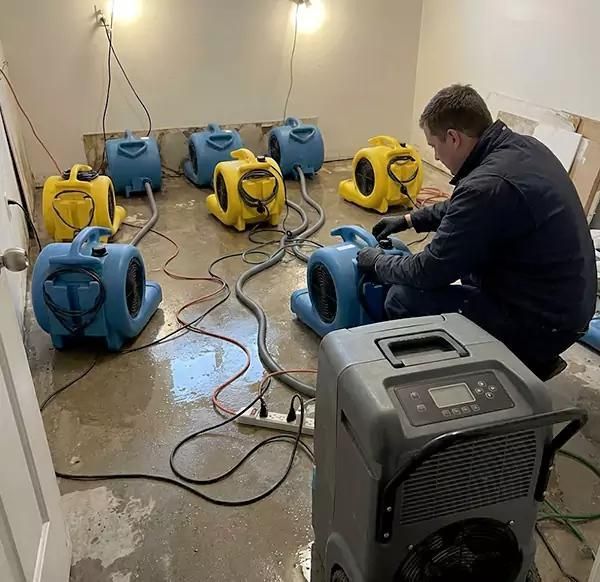
A remediation scope may include air-filtration equipment and detailed cleaning within the controlled work area. These services should not appear as unexplained line items.
The contractor should describe where equipment will operate, how it relates to containment and which surfaces will be cleaned after damaged materials are removed.
Cleaning should address the work area created during remediation, not simply the location where the original stain appeared. Dust and debris generated during controlled removal must be considered in the final cleaning plan.
The proposal should also clarify whether personal belongings, upholstered furniture, stored boxes or other contents are included. Structural cleaning and contents cleaning are not automatically the same service.
Repairs should not begin before remediation is complete
Removing affected drywall or insulation may leave an area clean but unfinished. Reconstruction restores the materials and finishes required to make the room usable again.
The estimate should state whether reconstruction is included, priced separately or expected to be completed under a later proposal. Property owners should not assume that replacing drywall, insulation, trim, flooring or paint is included simply because removal appears in the remediation estimate.
At Service Pros, we can coordinate mold cleanup with remodeling and reconstruction services. Keeping these stages connected helps prevent new finishes from being installed before the affected area is ready. The transition should still be documented. The property owner should know when remediation ends, when repairs can begin and whether additional decisions are required between the two phases.
Testing should be discussed without making assumptions
Property owners often ask whether mold testing is always required before remediation. There is no single answer that applies to every property.
The need for testing may depend on the condition, project objectives, occupancy concerns or requirements established by another professional or interested party. In some situations, visible affected material and an identifiable moisture problem may already provide enough information to develop an appropriate work plan.
In other situations, independent testing or post-remediation evaluation may be requested. The estimate should explain whether testing is included, whether it will be completed by another provider and how the results may influence the scope.
A contractor should not use testing as a substitute for evaluating moisture, materials and site conditions. It is one potential source of information within the larger project.
The proposal should explain how concealed findings are handled
Mold can extend behind baseboards, cabinets, drywall or other finished components. The complete extent may not be visible before controlled removal begins. This does not mean the project should become an open-ended agreement.
A professional estimate should explain how newly discovered conditions will be photographed, communicated and priced. The property owner should understand who can approve a change and whether the discovery affects only one portion of the project or the overall schedule.
We recommend designating one authorized decision-maker. This is especially helpful when the property is rented, managed for another owner or occupied by several people.
Written approval creates a record of what was found, why the scope changed and what additional work was authorized.
Compare estimates by responsibilities, not only total price
A lower proposal may cover a smaller work area, less material removal or no reconstruction. A higher proposal may include containment, equipment, disposal, detailed cleaning and repairs. Neither price explains the scope by itself.
When comparing mold remediation estimates, review whether each contractor has addressed:
- Moisture and the suspected source
- Containment and air management
- Material removal, cleaning and disposal
- Reconstruction and final review
These categories do not require every company to use identical methods or pricing. They provide a practical way to identify major responsibilities that may otherwise be omitted.
Ask questions when an estimate relies heavily on terms such as “treatment,” “spray” or “mold removal” without defining the surfaces, materials and work areas involved.
Be cautious with guaranteed outcomes based only on appearance
A newly cleaned or painted surface may look improved before the underlying condition has been resolved.
Mold remediation should not be evaluated solely by whether the stain is still visible. Moisture control, appropriate removal, cleaning and readiness for repairs all contribute to the outcome.
Contractors should also avoid making health guarantees or promising that a building will remain permanently mold-free. Future leaks, humidity or other water events can create new conditions outside the completed scope.
A reliable provider should instead explain what work will be performed, how the affected area will be evaluated and what property conditions require continued attention after the project.
The schedule should reflect the actual remediation stages
There is no universal duration for mold remediation. The timeline depends on the size and location of the affected area, containment requirements, material removal, drying conditions and repairs. A proposal should provide an informed schedule while acknowledging which decisions depend on findings during the work.
The project may include several milestones: setup, controlled removal, cleaning, drying or reassessment, final review and reconstruction. Understanding these stages is more useful than receiving one completion date without knowing what it includes.
If the moisture source requires work by another contractor, scheduling should account for that dependency. Remediation cannot provide a lasting correction if active water intrusion continues.
Documentation should continue throughout the project
The initial estimate is only one part of the project record. Property owners should retain the approved scope, photographs, moisture-related documentation, change orders, invoices and applicable completion information. If insurance is involved, these records can help organize communication, but coverage decisions remain subject to the individual policy and carrier.
Service Pros can document visible conditions and authorized restoration work. We do not promise that every mold-related service will be covered by insurance.
Keeping complete records can also help if another contractor later repairs plumbing, roofing, HVAC components or exterior drainage associated with the original moisture source.
Final review should happen before the work area is rebuilt
Before reconstruction covers the area, the property owner and project representative should review the completed remediation scope.
Confirm which materials were removed, which surfaces were cleaned and whether any additional moisture-source work remains outstanding.
If a separate provider will perform verification, coordinate that step before installing new drywall or other finishes. If Service Pros will continue into reconstruction, confirm the repair materials and finishing responsibilities before the next phase begins.
This review creates a clear transition between removing the affected materials and restoring the room.
How Service Pros approaches mold remediation in Fairfax
When we evaluate mold in a Fairfax property, we do not begin with a generic treatment package. We consider the moisture history, visible conditions, affected materials, surrounding spaces and how the property is occupied.
Our proposed scope explains the work area, planned containment, expected removal and cleaning, known repair needs and the process for handling concealed findings.
Service Pros provides mold remediation in Fairfax, VA for residential and commercial properties. Our broader Fairfax restoration services can also connect mold cleanup with water damage restoration and reconstruction when the conditions overlap.
We are a local, family-owned and veteran-owned restoration company serving Maryland, Washington, D.C., Virginia and surrounding communities. Our objective is to give property owners a clear recovery plan rather than treating visible mold as an isolated surface problem.
Request mold remediation service or visit our contact page to discuss your Fairfax property.
Related mold and restoration resources