What should a fire damage restoration estimate include in Alexandria?
After a fire, property owners often receive information from several sources at once: emergency personnel, an insurance representative, a restoration company, building management and sometimes separate repair contractors. The immediate question may be how quickly cleanup can begin, but the more important purchasing decision is whether the proposed restoration scope accounts for the complete loss.
At Service Pros Cleaning & Restoration, we evaluate more than the visibly burned area. Heat, smoke, soot, firefighting water and emergency access can affect rooms and materials that were not directly exposed to flames. A useful estimate for fire damage restoration in Alexandria, VA should connect those conditions to a clear sequence of stabilization, cleanup, drying, contents decisions and repair.
The lowest initial number may not represent the lowest final project cost if essential work has been omitted. Understanding what belongs in the scope helps homeowners, landlords, property managers and business owners compare proposals based on the work required rather than price alone.
The estimate should begin with the conditions found at the property
A responsible restoration scope starts with an on-site assessment. Photographs can help us prepare for the visit, but they cannot show how far smoke traveled, whether water entered concealed assemblies or which materials can be cleaned successfully.
We begin by identifying the origin area, visibly affected rooms, adjoining spaces and potential pathways between them. We also consider whether utilities have been restricted, openings need temporary protection or access has been limited by the fire department or another authority.
Alexandria properties range from detached homes to row houses, condominiums, mixed-use buildings and commercial spaces. Shared walls, common corridors, elevators, restricted parking and building-management requirements may all influence access and scheduling. The estimate should identify these known conditions instead of treating every fire loss as the same project.
Inspection is different from a complete repair prediction
The initial assessment should be detailed, but it may not reveal every concealed condition. Charred framing, wet insulation, damaged wiring or smoke residue inside an enclosed assembly may become visible only after authorized removal begins.
A trustworthy proposal should explain which conditions are confirmed, which assumptions are being used and how new findings will be documented. That is more reliable than promising a fixed final outcome before affected assemblies can be examined safely.
Dealing with fire, soot or smoke damage in Alexandria?
Request immediate help from Service Pros so we can evaluate the affected areas, explain the priorities and prepare a restoration scope based on the conditions at your property.
Emergency stabilization should be separated from permanent repairs
The first phase may involve protecting the property before detailed cleaning or reconstruction starts. Depending on the loss, that can include board-up, temporary weather protection, restricted work areas or other measures intended to reduce additional exposure.
The estimate should distinguish this emergency work from permanent repairs. Temporary protection serves an immediate purpose; it does not replace the evaluation, cleaning and rebuilding that may follow.
Property owners should also know who is authorized to approve emergency services and who will receive progress updates. Clear communication matters when an owner is off-site, a tenant occupies the property or a management company controls access.
Smoke and soot cleanup needs a defined area and method
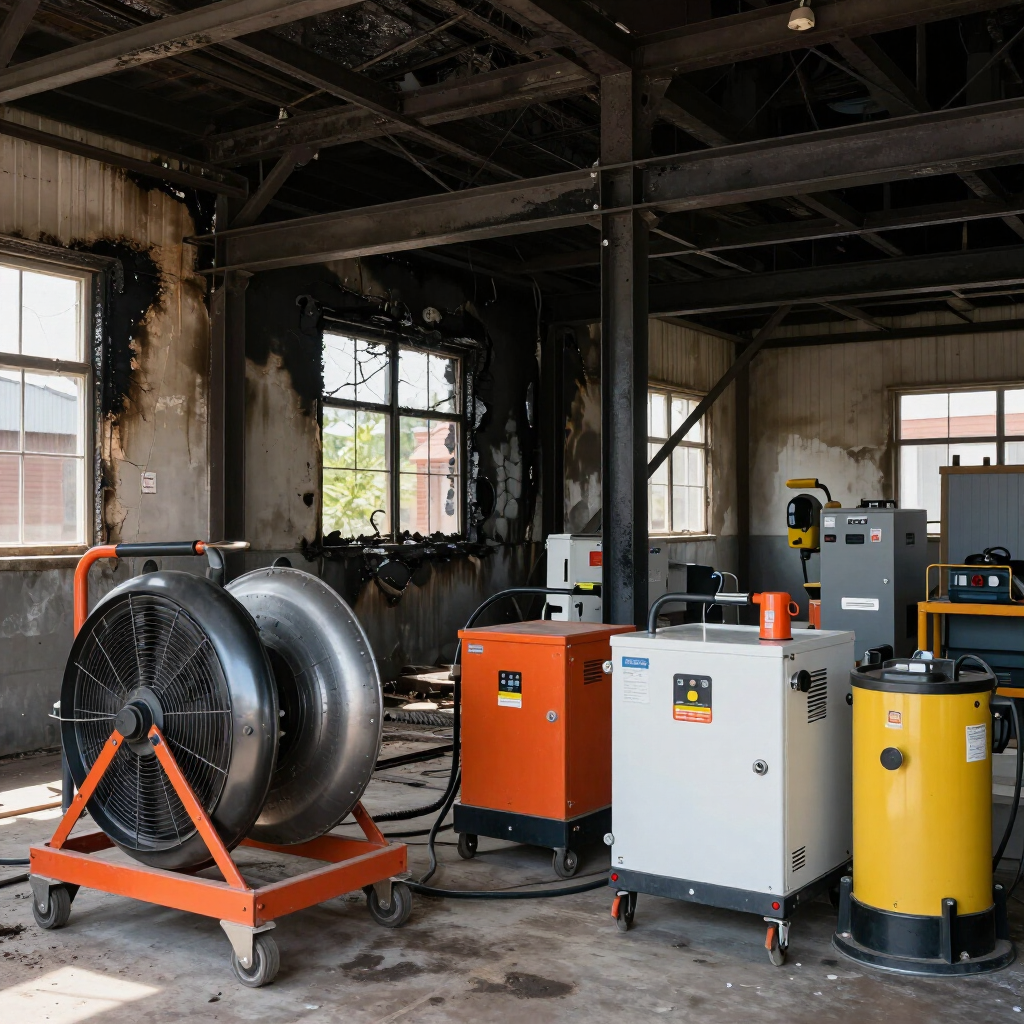
Visible soot is only one indicator of smoke movement. Residue may settle on walls, ceilings, cabinetry, fixtures and contents in rooms beyond the fire area. Air movement can also carry fine particles through doorways, stairwells, chases and mechanical pathways.
A fire restoration estimate should identify which rooms and surfaces are included in testing and cleaning. It should not use a broad phrase such as “smoke cleanup” without explaining the affected area or the work anticipated.
The appropriate cleaning approach depends on the surface and residue. Painted drywall, finished wood, metal, glass, masonry and textiles do not necessarily respond to the same process. Before widespread cleaning begins, selected methods may need to be evaluated on the material involved.
Odor treatment should follow source removal
Deodorization is most effective when soot, damaged debris and other odor sources have already been addressed. Applying fragrance or treating the air without cleaning affected materials may temporarily change the smell while leaving the source in place.
The scope should explain how odor conditions will be reassessed as cleaning progresses. Some materials may respond to cleaning and deodorization; others may require removal when contamination or physical damage prevents a reliable result.
Firefighting water can create a second restoration problem
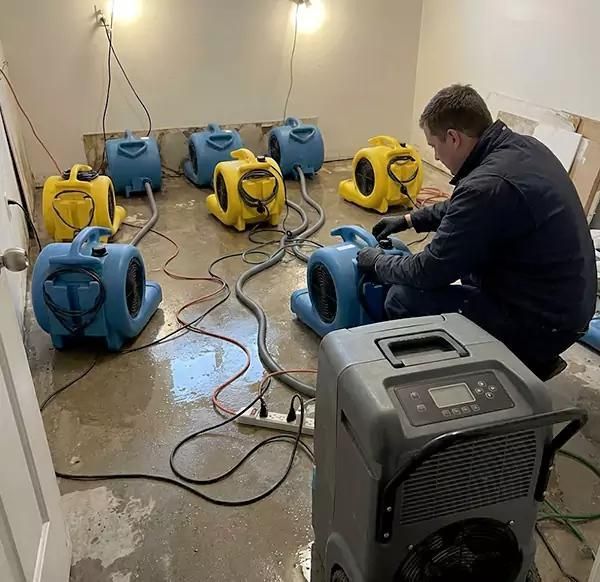
Water used during suppression may travel below the fire area, beneath flooring or into wall and ceiling cavities. A room with limited flame damage can still require water extraction or structural drying.
The estimate should therefore address both fire residue and moisture when both are present. Drying should be based on the materials and areas affected, not only on water visible at the surface. If wet materials are removed, the proposal should clarify whether disposal, drying of the exposed assembly and later replacement are included.
This coordination is important because reconstruction should not conceal unresolved moisture. Our water damage restoration services can be integrated into the recovery plan when suppression water or another water source affects the property.
Contents decisions should not be left undefined
Furniture, electronics, clothing, documents, inventory and personal belongings can influence the schedule and cost of a fire restoration project. Contents may need to be protected in place, moved within the property, evaluated for cleaning or removed from the work area.
Before work begins, the estimate should state who is responsible for handling affected contents and how decisions will be recorded. Items should not be discarded without the appropriate authorization and documentation.
For an occupied home, priority belongings may need to be identified early. For a commercial property, the owner may need a plan for inventory, records, equipment and business-critical items. The purpose is not to make every final contents decision during the first visit; it is to establish a controlled process for making those decisions.
Material removal must connect to the reconstruction plan
Fire restoration frequently involves both mitigation and repair. Mitigation addresses active damage, debris, soot, odor, water and unstable conditions. Reconstruction restores the drywall, insulation, flooring, trim, cabinetry or other components that could not remain.
A proposal should make the boundary between these phases clear. If the same company will coordinate cleanup and reconstruction, the estimate should explain how the repair scope will be developed after removal and cleaning. If another contractor will perform the repairs, the turnover conditions and responsibilities should be documented.
At Service Pros, we view the property as one recovery project rather than a collection of unrelated tasks. Our remodeling and reconstruction services can help carry the work from damage-related removal into the repairs required to make the space usable again.
Ask how changes to the scope will be approved
An estimate should provide control even when concealed damage is possible. Before signing, property owners should understand how additional findings will be photographed, explained, priced and authorized.
Verbal approval can create confusion when several people are involved. Establish one authorized decision-maker and request written change documentation. The record should identify the condition discovered, the recommended response and its effect on cost or schedule.
This process protects both the property owner and the restoration team. It allows necessary decisions to be made without turning the project into an open-ended agreement.
Insurance documentation and restoration work serve different purposes
Many fire losses involve an insurance claim, but the restoration company and insurance carrier do not perform the same role. The contractor evaluates and performs the authorized work. The carrier interprets the policy and determines coverage according to its terms.
We can document visible conditions, measurements, work performed and approved changes to support communication during the claim. Property owners should retain photographs, estimates, invoices, inventories and correspondence in one organized file.
Do not delay urgent property protection solely because every coverage question has not been answered. At the same time, understand who can authorize work and which decisions should be coordinated with the carrier. A strong estimate supports that conversation without promising a specific coverage result.
A complete estimate should explain what is excluded
Clarity about exclusions is as important as clarity about included work. Painting, finish matching, specialty cleaning, HVAC service, appliance evaluation, engineering, permits or code-related upgrades may require separate pricing or another qualified provider, depending on the project.
An exclusion does not automatically make an estimate incomplete. The problem arises when the owner assumes a task is included and discovers later that it was never assigned.
Review the proposal for phrases such as “as needed” or “if required.” Ask who decides whether the work is required, how it will be priced and whether it affects another phase. Specific responsibilities make competing estimates easier to compare.
The proposed schedule should include decision points, not only a finish date
Fire restoration timelines depend on access, safety restrictions, the size of the affected area, contents handling, drying needs, material availability, inspections and approved repairs. A contractor should not present one universal duration as though every loss follows the same path.
Instead, look for meaningful milestones: initial stabilization, authorized removal, cleaning, drying when necessary, reassessment, repair-scope approval and final walkthrough. This gives owners a practical way to understand progress even when the final completion date depends on findings or outside approvals.
Commercial owners should also discuss phased access. In some properties, unaffected areas may remain available while restoration proceeds elsewhere, but that decision should be based on actual separation, safety and operational conditions—not convenience alone.
Final verification should be part of the project plan
The end of visible cleanup is not automatically the end of restoration. The final review should compare completed work with the approved scope and address remaining repairs, surfaces, fixtures and contents responsibilities.
Owners should receive the relevant documentation for completed work and approved changes. If a portion of the project will continue under a separate repair phase, the remaining scope and next responsible party should be clear.
Walk through the property with the project representative when possible. Raise unresolved concerns before equipment is removed, access closes or a separate contractor begins covering cleaned assemblies with new finishes.
How we approach fire damage restoration in Alexandria
When Service Pros evaluates a fire-damaged property, we look at how the loss affected the building as a system. The burn area matters, but so do smoke pathways, water migration, contents, utilities, access and the repairs required afterward.
We serve residential and commercial properties through our Alexandria restoration team. Service Pros is a local, family-owned and veteran-owned restoration company serving Maryland, Washington, D.C., Virginia and surrounding communities. We provide 24/7 emergency restoration support and coordinate fire cleanup, smoke and soot removal, odor treatment, contents evaluation and reconstruction planning according to the conditions found on site.
Our goal is to give you a scope you can understand: what we found, what needs to happen first, which work is included and where additional decisions may be required. That clarity is especially important after a fire, when property owners are making consequential decisions under pressure.
Request fire damage restoration service or visit our contact page to speak with Service Pros about an Alexandria property.
Related fire restoration resources