Emergency Flooding Services: What to Do in the First 60 Minutes
When your home floods, the first 60 minutes matter. The faster you stop the source, protect your safety, document the damage, and call emergency flooding services, the better chance you have of reducing water damage, preventing mold growth, and protecting your property.
Whether you are dealing with a flooded basement, storm damage cleanup, a burst pipe, or standing water inside your home, professional help is often needed quickly. Emergency water extraction and a proper water mitigation process can help remove water, dry affected materials, and reduce long-term damage.
For urgent help, visit our Flood Damage Restoration Services or learn more about our Water Damage Restoration Services.
Need help right now? Call Service Pro for emergency flooding services and fast water extraction.
0–10 Minutes: Make Safety the First Priority
Before starting flood cleanup, focus on safety. Floodwater can create electrical hazards, slippery surfaces, contaminated areas, and hidden structural risks. Do not walk into standing water if outlets, appliances, extension cords, or electrical panels may be exposed.
Start with these steps:
- Turn off the water source if it is safe to do so.
- Avoid rooms with standing water near electricity.
- Keep children and pets away from affected areas.
- Do not touch wet electrical devices or outlets.
- Avoid walking on soaked carpet, weakened flooring, or sagging areas.
- If flooding is severe, leave the area and call emergency help.
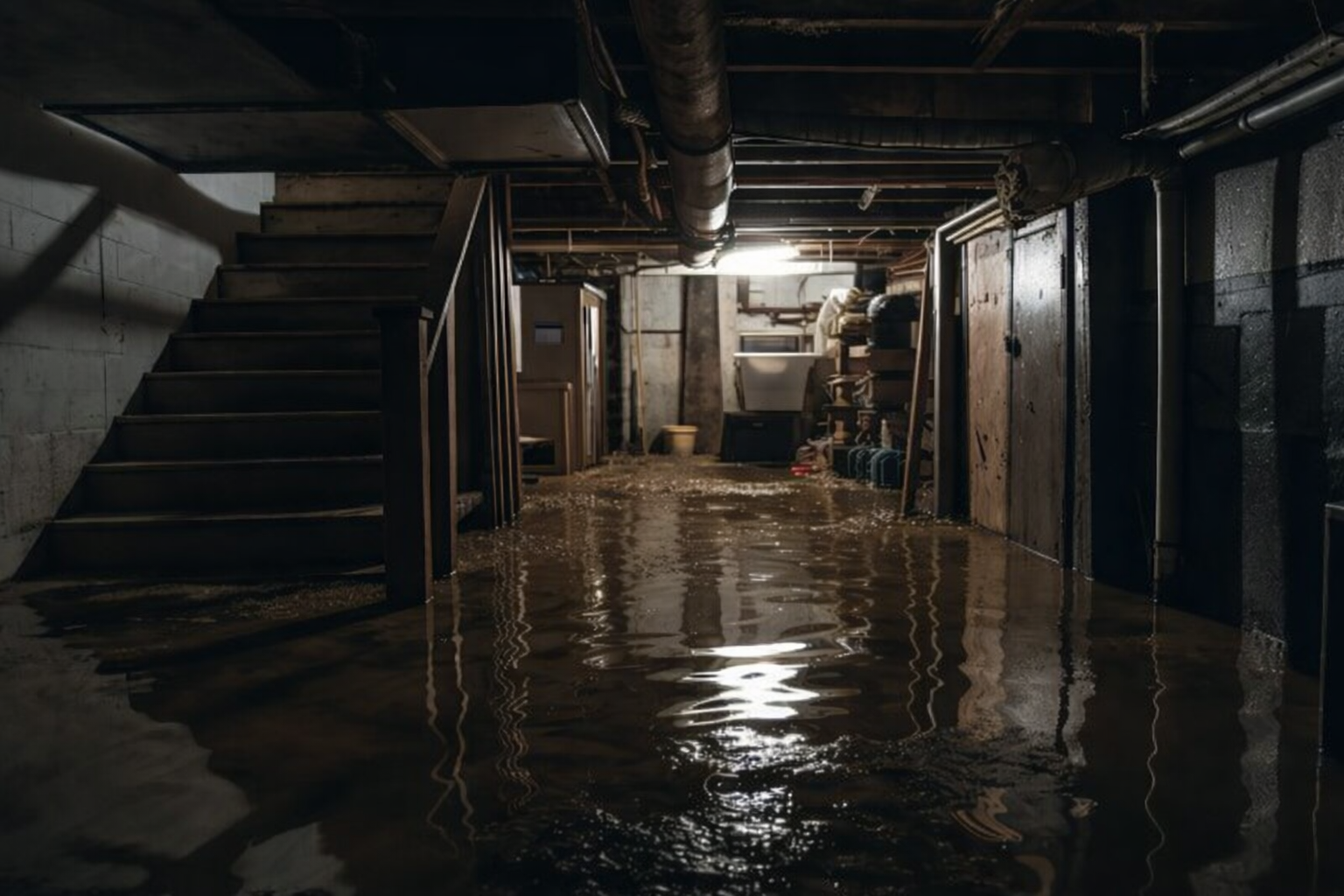
A flooded basement can be especially dangerous because electrical panels, appliances, HVAC systems, and stored belongings are often located there. If you are unsure whether it is safe, wait for a trained restoration professional.
If water is spreading or safety is uncertain, call Service Pro before entering the flooded area.
10–20 Minutes: Stop the Water Source and Limit the Spread
Once everyone is safe, try to stop the source of the flooding if you can do it without risk. This may mean turning off the main water supply, shutting off a leaking appliance, or moving water away from the home if storm runoff is entering.
Common flooding sources include:
| Flooding Source | What It May Mean | First Action |
|---|---|---|
| Burst pipe | Pressurized water is entering the home | Shut off the main water valve |
| Failed sump pump | Basement water is rising | Avoid electrical contact and call for help |
| Stormwater intrusion | Exterior drainage may be overwhelmed | Move valuables and request storm damage cleanup |
| Appliance leak | Washer, water heater, or dishwasher failure | Turn off the appliance and water supply |
| Sewer backup | Contaminated water may be present | Avoid contact and call professionals immediately |
Do not spend too much time trying to clean if water is still entering. Emergency flooding services should focus first on stopping the source, then removing water and starting mitigation.
Learn more about
professional Flood Cleanup Services for homes affected by standing water.
20–40 Minutes: Document the Damage and Call Emergency Water Extraction
After the immediate source is controlled, document the damage before moving too much. Photos and videos can help support your insurance claim and create a record of what happened.
Take photos of:
- Standing water levels
- Wet flooring and carpet
- Damaged walls or baseboards
- Furniture and personal items
- The source of the water, if visible
- Storm damage around doors, windows, or basement entry points
- Any affected appliances or mechanical systems
Then call a restoration company for emergency water extraction. Removing water quickly is one of the most important parts of the water mitigation process because soaked materials can continue absorbing moisture even after the visible water is gone.
Professional equipment may include:
- High-powered extraction units
- Pumps for standing water
- Moisture meters
- Air movers
- Dehumidifiers
- Thermal imaging tools
- Sanitizing equipment when needed
Call Service Pro for emergency water extraction before water spreads deeper into floors, walls, and structural materials.
40–60 Minutes: Begin the Water Mitigation Process
The water mitigation process is designed to reduce damage after flooding. It is not just about removing visible water. It also includes finding hidden moisture, drying affected materials, preventing mold growth, and protecting the structure of your home.
A professional water mitigation process may include:
Inspection and moisture mapping
The team checks floors, walls, ceilings, trim, and hidden areas for moisture.
2. Emergency water extraction
Standing water is removed from floors, carpet, basements, and affected rooms.
3. Removal of damaged materials when needed
Saturated carpet padding, drywall, insulation, or damaged materials may need removal.
4. Structural drying
Air movers and dehumidifiers help dry the affected areas properly.
5. Cleaning and sanitizing
Surfaces may be cleaned, deodorized, or sanitized depending on the water source.
6. Monitoring and documentation
Moisture levels are checked until the affected areas are dry.
Internal link: If flooding has affected walls, flooring, or structural areas, visit our Water Damage Restoration Services page for next steps.
What Not to Do After a Flooded Basement or Storm Damage
During a flood emergency, homeowners often try to act fast, but some actions can make the damage worse or create safety risks.
Avoid these mistakes:
- Do not use a household vacuum to remove floodwater.
- Do not walk into standing water near electricity.
- Do not wait days to call for flood cleanup.
- Do not assume the area is dry because the surface looks dry.
- Do not leave wet carpet padding in place without inspection.
- Do not ignore musty odors after cleanup.
- Do not throw away damaged items before documenting them.
- Do not use fans alone if moisture is trapped inside walls or flooring.
Storm damage cleanup and flood cleanup should be handled quickly because water can move into baseboards, drywall, subfloors, insulation, and framing. The longer moisture remains, the higher the risk of secondary damage.
If your basement flooded after a storm or plumbing failure, request emergency flooding services from Service Pro today.
FAQs About Emergency Flooding Services
How long has ServicePros Cleaning & Restoration been in business?
ServicePros Cleaning & Restoration has been a preferred 24 7 emergency water damage company in Gaithersburg, MD serving Maryland, Washington D.C., and Virginia since 2001. The company is family- and veteran-owned and provides restoration services for residential and commercial properties. Their team has more than 20 years of experience in water and mold damage restoration. This long history allows them to handle a wide range of restoration scenarios with knowledge and professionalism. Clients can trust that their property is being handled by a company with established expertise in the field.
What areas do you serve?
The company provides restoration services throughout Maryland, Washington D.C., and Northern Virginia. They frequently serve Gaithersburg, Alexandria, Rockville, and surrounding communities. As a 24 7 emergency water damage company in Gaithersburg, MD, we're available to respond quickly when water damage occurs. Clients in the service areas can rely on our local presence for fast and accessible support. Our service coverage ensures that both residential and commercial properties can receive timely restoration assistance.
What services does ServicePros provide?
ServicePros Cleaning & Restoration offers water damage restoration, mold remediation, fire damage cleanup, smoke odor removal, and post-disaster remodeling.
We also provide consultation and assessment for affected properties. Our team can assist with cleanup and rebuilding to restore safety and usability. Each service is designed to address immediate risks while supporting longer-term recovery and restoration.
Are your technicians certified and insured?
Yes, all technicians are trained to perform restoration work safely and follow industry guidelines. Our company is licensed and insured to operate in the service areas. This ensures that restoration work is performed according to professional standards. Customers can ask for proof of certification and insurance before work begins for added peace of mind.
Do you offer warranties for your services?
ServicePros offers a one-year labor warranty and a five-year material warranty on restoration work. These warranties cover the work completed by our technicians and the materials used. Customers can ask for documentation to confirm the coverage details. The warranties help protect property owners against unexpected issues after the restoration is completed. This coverage gives clients confidence that any necessary follow-up work will be addressed promptly.
Can you work with my insurance company directly?
Yes, ServicePros can coordinate with insurance companies on behalf of clients. Our team handles documentation and communication to support the claims process. Working with a 24 7 emergency water damage company in Gaithersburg, MD like ours can help streamline insurance procedures after a loss. This service reduces stress and ensures the restoration work is approved and completed efficiently.
How quickly can ServicePros respond to an emergency call?
ServicePros operates 24/7, every day of the year. Once contacted, the team can typically respond within hours, depending on location and workload. As an expert 24 7 emergency water damage company in Gaithersburg, MD, we're prepared to begin cleanup and mitigation quickly. Rapid response helps minimize damage and prevent secondary issues like mold growth.
Does ServicePros provide services beyond water and mold restoration?
Yes, ServicePros also provides fire damage cleanup, smoke odor removal, and post-disaster remodeling. We can repair structural damage, replace materials, and restore the usability of affected spaces. Clients can request a consultation with our 24 7 emergency water damage company in Gaithersburg, MD to discuss which services are appropriate for their situation.